

Archives: Blog Articles
Description.
The Role of AI in Social Innovation in Sri Lanka

Charith De Silva
5 min read
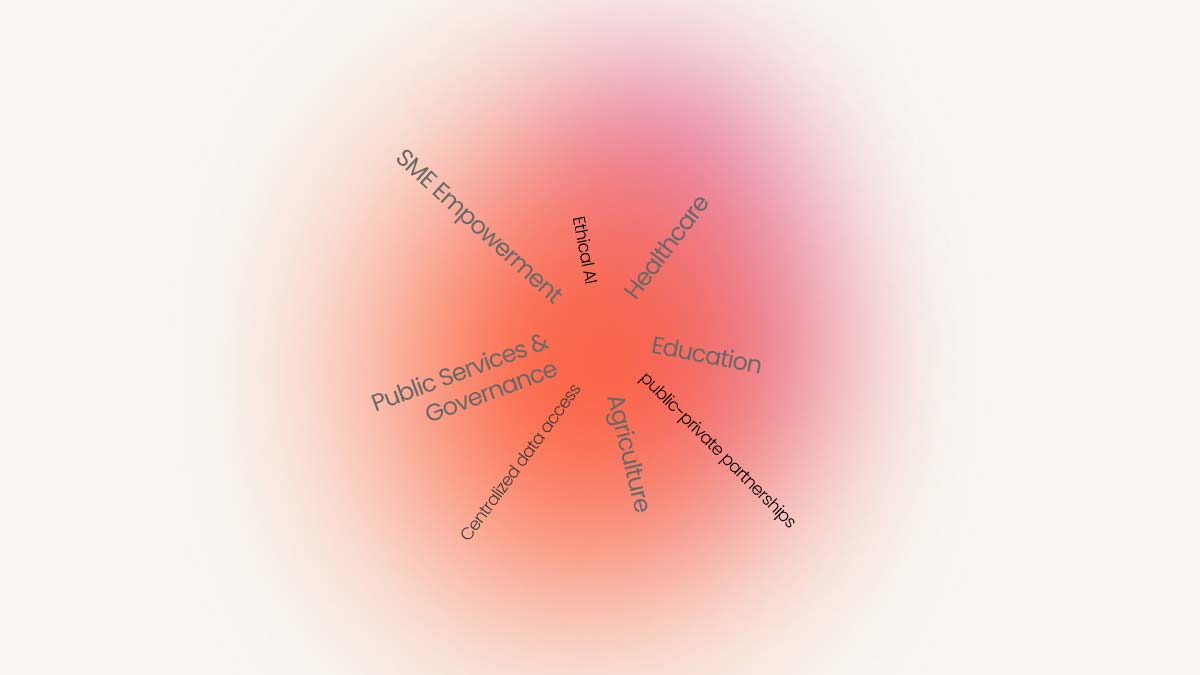
Artificial Intelligence (AI) is transforming societies worldwide, and Sri Lanka stands at a vital moment to make use of its potential not just for economic growth but for meaningful social innovation. By bridging technology with creativity and purpose, AI can help address the country’s most pressing challenges across healthcare, education, agriculture, governance, and beyond.
The Current AI Landscape in Sri Lanka
Sri Lanka has begun taking careful steps toward AI adoption, but the journey is still in its early stages:
- Government Commitment: From 2024, LKR. 3 billion was allocated to promote digital transformation, with AI playing a vital role.
References: https://www.biometricupdate.com/202502/sri-lanka-sets-budget-for-2025-digital-transformation-strategy - Economic Ambition: The goal is to increase the digital economy’s contribution from the current 3–5 % of GDP to 15 % by 2025.
References: https://meatechwatch.com/2025/06/30/sri-lanka-targets-fivefold-digital-economy-growth-in-five-years-with-ai-centric-strategy/ - AI Readiness: Despite this goal, Sri Lanka’s ranking of 85th out of 193 countries in terms of global AI readiness shows gaps in talent, infrastructure, and adoption.
References: https://oxfordinsights.com/ai-readiness/ai-readiness-index/ - Private Sector Adoption: A study found only 26 out of 279 listed companies have AI initiatives, showing huge untapped potential.
References: https://ideas.repec.org/a/bjb/journl/v14y2025i4p707-717.html - National AI Strategy: The government has a framework promoting responsible, inclusive AI aligned with the UN Sustainable Development Goals (SDGs).
References: https://www.citralab.lk/work/supporting-the-development-of-the-national-artificial-intelligence-ai-strategy-for-sri-lanka
Why AI is Critical for Social Innovation
Social innovation aims to create solutions that improve lives, strengthen communities, and address systemic problems. AI adds unique capabilities to this task, increasing its effectiveness.
- Data Driven Insights: AI can process huge amounts of data to identify patterns and trends invisible to the human eye.
- Scalable Solutions: Once developed, AI models can be deployed across multiple regions with minimal cost.
- Personalization: AI enables customized solutions whether in education, healthcare, or public services making interventions more effective.
- Predictive Capabilities: By anticipating needs and risks, AI can prevent problems rather than merely react to them.
Opportunities for AI in Social Innovation in Sri Lanka
Based on the current statistics, several sectors emerge as high impact areas for AI driven innovation:
- Healthcare
- Why? Limited resources and rural healthcare gaps.
- Potential AI Solutions: Remote diagnostics, disease outbreak prediction, and AI assisted medical imaging.
- Why? Limited resources and rural healthcare gaps.
- Education
- Why? Geographical inequality
- Potential AI Solutions: Personalized learning platforms, AI driven tutoring in local languages, and curriculum adaptation for different learning needs.
- Why? Geographical inequality
- Agriculture
- Why? Agriculture employs nearly 25% of the workforce, yet productivity is low.
- Potential AI Solutions: Crop disease detection, predictive weather analytics, and precision farming techniques.
- Why? Agriculture employs nearly 25% of the workforce, yet productivity is low.
- Public Sector & Governance
- Why? Need for greater efficiency and transparency.
- Potential AI Solutions: AI powered citizen service portals, automated document processing, and predictive resource allocation.
- Why? Need for greater efficiency and transparency.
- Small and Medium Enterprises (SMEs)
- Why? Many SMEs unknowingly use AI (e.g: WhatsApp automation) but lack strategic integration.
- Potential AI Solutions: Cost effective AI toolkits for marketing, customer support, and operational effectiveness.
- Why? Many SMEs unknowingly use AI (e.g: WhatsApp automation) but lack strategic integration.
Challenges to Overcome
Sri Lanka’s poor AI readiness ranking highlights significant challenges despite the potential:
- Lack of skilled AI professionals.
- Limited AI infrastructure and research capacity.
- Lack of quality data and data accessibility. In many sectors, reliable, up to date, and structured datasets are low, which significantly affects AI model development and deployment. Even when data exists, it may be fragmented across institutions, not digitized, or subject to restrictive access policies.
- Low awareness among businesses and the public, about AI applications.
- Concerns about ethics, data privacy, and equitable access.
How Data Platforms Can Accelerate AI for Social Innovation
One promising example of bridging the data gap is the Sustainable Development Goals (SDG) Monitoring Platform implemented by the Sustainable Development Council of Sri Lanka. This platform combines national and regional level data aligned to the UN’s SDG framework, providing:
- Centralized Access: Multiple ministries, agencies, and stakeholders can feed and retrieve data from one location.
- Standardized Data Formats: Ensures consistency and comparability across datasets.
- Transparency: Public and institutional access to relevant metrics helps build trust and encourage collaboration.
- Decision Making Support: Policymakers and innovators can leverage these datasets to track progress, identify gaps, and design AI powered interventions that are evidence based.
For example, if the platform shows lagging progress on SDG 3 (Good Health and Well being) in certain provinces, AI tools could analyze hospital records, patient feedback, and local environmental data to suggest targeted healthcare programs. Similarly, AI can cross analyze SDG datasets with real time social media sentiment or climate data to design faster, more precise interventions.
Sri Lanka can encourage the development of AI driven solutions with measurable social impact by expanding these platforms and making additional datasets available for innovation.
A Roadmap for AI Driven Social Innovation
To fully unlock AI’s potential for social good, Sri Lanka must:
- Invest in AI Education & Skills: Train both technical experts and non technical stakeholders to understand and apply AI.
- Foster Public and Private Partnerships: Collaborations between government, private sector, and NGOs can accelerate adoption.
- Promote Ethical AI Use: Implement frameworks for transparency, bias reduction, and data privacy.
- Support AI Startups & Innovation Labs: Provide funding, mentorship, and testbeds for socially impactful AI projects.
- Measure Impact: Use clear metrics to track how AI interventions improve social outcomes.
Conclusion
Sri Lanka’s AI journey is still in its infancy, but with a focused strategy, it has the potential to become a leader in using AI for social good. By targeting healthcare, education, agriculture, governance, SME empowerment, and using platforms like the SDG Monitoring Platform, the country can create scalable, impactful solutions that improve lives while advancing economic growth.
AI is not just about algorithms and data; it’s about shaping a future where technology expands human potential and addresses the root causes of societal challenges.
Why a Holistic Design Approach Matters: Going Beyond Systems Thinking

Dharani Karunarathna
8 min read

In today’s rapidly evolving world, effective design must address complexity beyond mere systems and functionalities. This is where holistic design comes into play, offering a deeper, more meaningful engagement with the end-users and the context they live within.
What is Holistic Design?
Holistic design is an integrative approach that considers every aspect of a user’s environment, interactions, behaviors, and emotions. Unlike traditional systems thinking which focuses mainly on components and their direct interactions, holistic design dives deeper, considering broader contexts, cultural nuances, emotional responses, and long-term impacts.
While systems thinking is excellent for managing interrelated parts and processes, holistic design acknowledges and embraces complexity and ambiguity, creating richer, more effective, and more sustainable solutions.
Why Holistic Thinking is Superior to Systems Thinking
Systems thinking helps us understand the interactions between different components of a system, but it often stops short of fully comprehending human complexity. Holistic thinking goes beyond this by:
- Incorporating human emotions, values, and motivations.
- Accounting for socio-cultural contexts and diversity.
- Focusing on long-term sustainability rather than immediate problem-solving.
Real-World Example: Healthcare App Development
Consider the example of developing a healthcare app aimed at improving medication adherence.
- System Thinking Approach:
Initially, developers created a reminder app focusing solely on the system components: medication schedules, alarms, and notifications. Despite being technically sound, user engagement remained low because the app overlooked the emotional and behavioral aspects influencing medication adherence, such as forgetfulness driven by stress or lack of motivation due to emotional factors. - Holistic Approach:
Adopting a holistic design approach, the developers conducted extensive user research and discovered that emotional support, educational content, and personalized motivational messages significantly increased adherence. By integrating these elements, the app became much more successful and genuinely improved patient outcomes.
Insights from Our Social Innovation Projects
Our extensive experience working on diverse social innovation projects has demonstrated the limitations of systems thinking. We realized that to create genuinely transformative digital solutions, we must:
- Understand user lifestyles and the contexts in which they operate.
- Include multiple layers of user interactions, beyond just system interfaces.
- Adapt our solutions continuously based on feedback and changing environments.
Implementing Holistic Design in Our Projects
Integrating holistic design into our digital projects involves:
1. Empathy-driven Research:
- Conduct deep user research to understand motivations, daily struggles, and aspirations.
2. Contextual Awareness:
- Investigate the broader social, cultural, economic, and environmental contexts.
3. Inclusive Co-creation:
- Engage stakeholders and users actively in the design process.
4. Iterative Feedback Loops:
- Continuously refine designs based on real-world feedback.
Checklist for Holistic Thinking
To ensure holistic thinking throughout your projects, always ask:
- Who are the end users, and what drives their behaviors?
Who will be using this product most often? What motivates them? What are their daily challenges? What are they trying to achieve?
Example: For an e-learning app, understanding that rural students may be motivated by career advancement rather than test scores helps shape the content to align with their goals. - How does the cultural and social context influence user interactions?
What cultural norms might affect how users engage with our solution? Are there local practices we need to accommodate? How do social dynamics influence adoption?
Example : A payment app for some countries must account for cash-preferred cultures, offering features like cash-in and cash-out at local stores. - Have we considered the emotional impact of our design?
How will users feel when they use our solution? Could our design inadvertently cause stress or confusion? How can we create moments of delight?
Example: A healthcare chatbot should use empathetic, supportive language to reduce patient anxiety, not just provide factual responses. - Are stakeholders and users genuinely involved in shaping the solution?
Who needs to be involved in co-creating this solution? How can we ensure diverse perspectives are represented? Are we actively listening to stakeholder feedback?
Example: In developing a public transport app, engaging commuters, drivers, and city planners ensures diverse needs are addressed. - How adaptable is our solution to future changes?
What changes in technology, policy, or user behavior might we need to adapt to? How easily can we add new features or pivot?
Example: A retail platform should be built with modular architecture to easily integrate emerging payment technologies like digital wallets. - Does our solution enhance or harm the broader ecosystem?
How will our solution affect related industries or communities? Could there be unintended negative consequences? How can we ensure our impact is net positive?
Example: A food delivery app should consider its impact on local restaurants, ensuring policies that support rather than exploit small businesses.
Conclusion
Holistic design goes beyond solving immediate problems. It anticipates and adapts to real-life complexities, creating meaningful, impactful solutions. By embracing holistic thinking, digital projects can truly transform businesses and communities, ensuring sustainability and lasting positive change.
Setting Up DocuSign Connect With Local Webhook Listener Using Ngrok With NodeJS: A Practical Guide

Shrenik Deep Sathiyanathan
10 min read

Introduction
While working on a project that required automating the process of sending, signing, and tracking documents, I encountered a challenge: setting up a local webhook listener to receive real-time updates from DocuSign when a document was signed. After scouring the web, I found that resources on integrating DocuSign Connect with a local development environment were limited, especially when using tools like Ngrok to expose a local server.
In this article, I’ll walk you through the process of setting up DocuSign Connect to receive webhook notifications locally with NodeJS. Using Ngrok, you can easily expose your local server to DocuSign for testing, allowing you to develop and debug in a more controlled environment. Whether you’re tracking document statuses, managing user notifications, or triggering workflows when contracts are signed, this guide will show you how to get started with DocuSign Connect and webhooks in a generalized, flexible setup.
What are Webhooks?
Webhooks are a way for applications to send real-time data to another service when a specific event occurs. Instead of continuously checking for updates, webhooks allow your application to receive event notifications automatically. When a designated event is triggered—such as a document being signed in DocuSign—the webhook sends an HTTP POST request to a specified URL (your webhook listener). This request contains a payload, typically in JSON format, with details about the event.
What is DocuSign Connect?
Before we explore what DocuSign Connect is, it’s essential to understand DocuSign itself. DocuSign is a leading e-signature platform that simplifies the process of sending, signing, and managing documents electronically. It enables users to sign legally binding agreements from anywhere and at any time, all through a secure online interface. This capability eliminates the need for printing, scanning, and mailing physical documents, making transactions quicker and more efficient.
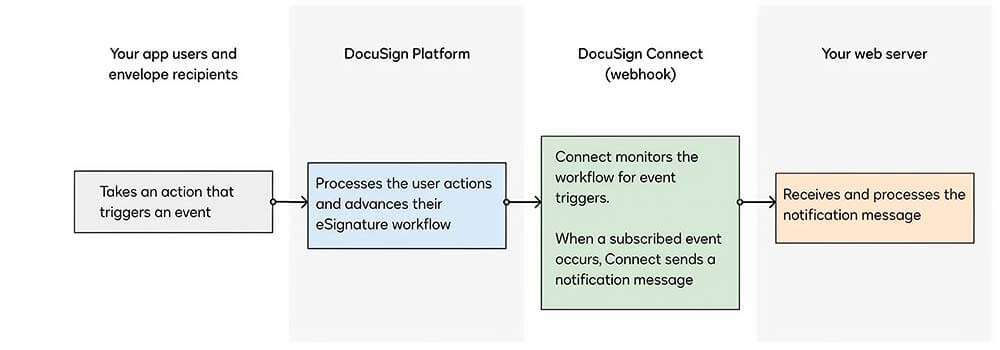
Now, let’s discuss DocuSign Connect. This is a powerful webhook service that allows your applications to receive real-time notifications about specific events related to your documents. When events occur—such as a document being signed or completed—DocuSign sends an HTTP POST request to a specified URL with relevant details about the event. This functionality enables your system to automatically respond to these events, whether it’s storing a signed document, notifying stakeholders, or triggering additional workflows based on the document’s status. DocuSign Connect ensures that you stay informed and can act promptly, enhancing your overall document management process.
What is Ngrok?
To test and develop with DocuSign Connect locally, Ngrok comes in handy. Ngrok creates a secure tunnel to your local server, allowing you to expose your webhook listener to the internet. This way, you can easily receive and test the real-time notifications from DocuSign in your development environment without needing to deploy your application to a public server. By integrating DocuSign Connect with Ngrok, you can streamline your development process and ensure your application is responsive to document events.
Prerequisites
In this article we’ll be focusing on the implementation and setup of DocuSign connect with Ngrok and I’ve listed down the prerequisites that will be needed:
- DocuSign Developer Account setup.
- Local development environment (NodeJS).
- Postman (optional) for testing webhooks locally.
Node Server Setup
To get started, initialize a new node project.

Next install basic packages that are required to get a server up and running.

Next we setup a simple node server.
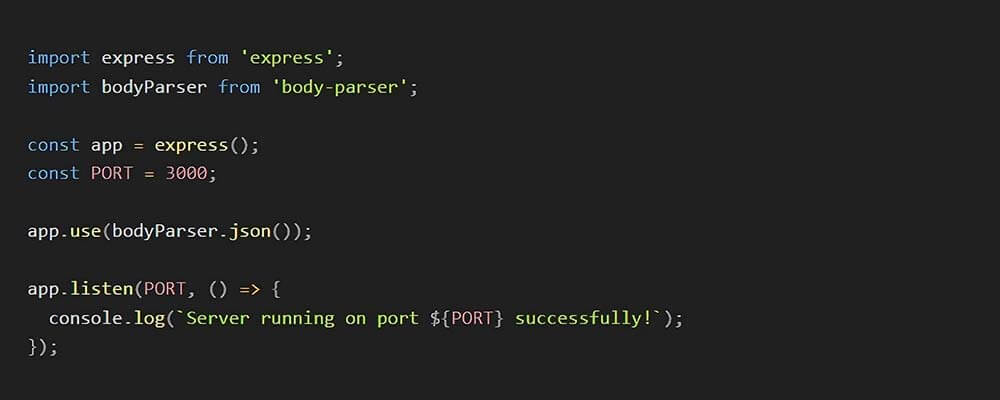
Next setup a route for the webhook listener.

Now that we have the local Node.js server set up with a route, we can make POST requests to http://localhost:3000/hook using a tool like Postman. However, it’s important to note that this is still just a standard route at this point. We haven’t yet configured it to function as a webhook listener, but I’ll guide you through that process shortly.
DocuSign Connect Configuration
Next up is the DocuSign Connect Configuration which you can set up by following the DocuSign Connect Webhook Demo Tutorial. As you follow along the setup, you will come across the following field.

Now, you’re supposed to include the webhook listener route here and once you’ve set up a trigger event to your DocuSign document like the image below.
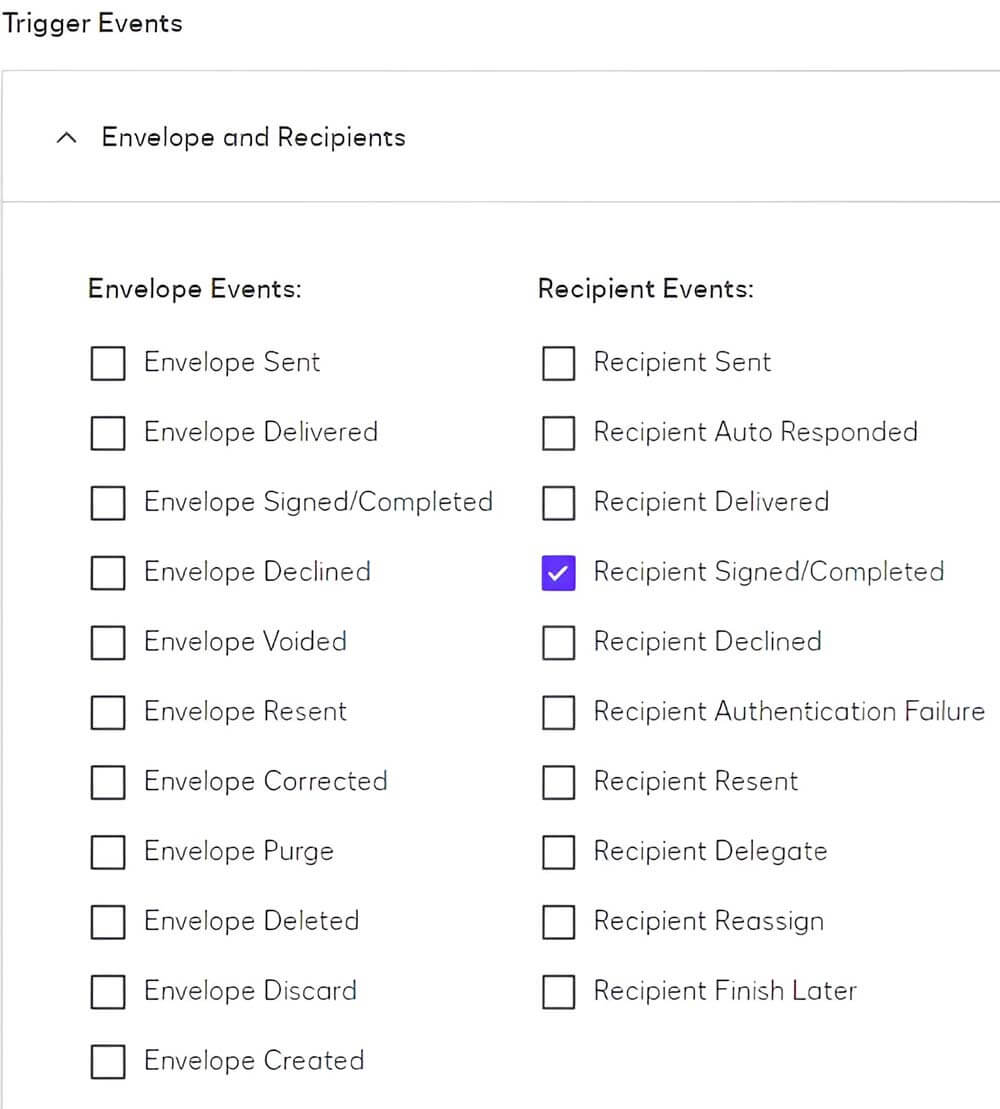
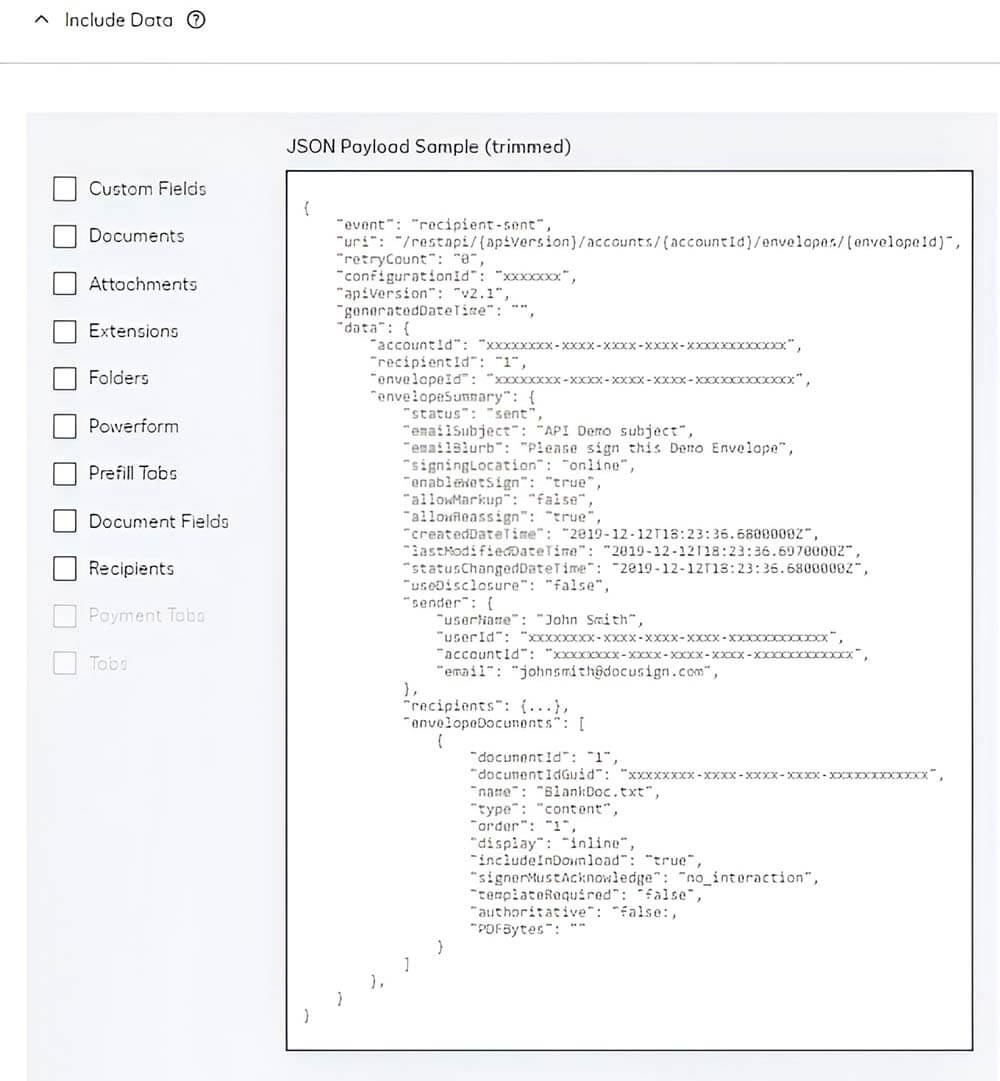
In this case when the recipient has Signed/Completed the document that was sent out, a JSON payload will be sent to the webhook listener route where you can setup what you want to include.
If we include http://localhost:3000/hook in the URL to publish field mentioned earlier, we won’t receive the payload. This is because our server is running locally, and the localhost route isn’t accessible from the internet. As a result, we can’t receive the payload returned from DocuSign. This is where Ngrok comes into play, allowing us to expose our local server to the internet and receive incoming requests.
Ngrok Setup
Firstly, we’ll have to sign up to an Ngrok account and follow the instructions which would be to installing Ngrok to your device, authenticating with an authentication token and running the command they provide to us in the project terminal which would look like ngrok http http://localhost:3000.
After successful installation and configuration, you’ll receive the Ngrok tunnel URL / Public URL equivalent to http://localhost:3000 which would look something like this in your terminal.

Now this is the URL you’ll have to include in your URL to publish field by also including the endpoint name which will be resulting in something like this,

If your setup is successful, you will receive a JSON payload based on the document event trigger. You can then use this data to proceed with the necessary actions for your project.
Maximizing Business Efficiency with Trello Project Management

Ahinsa Somaratne
5 min read

In today’s dynamic business landscape, effective project management is a cornerstone for success. Among the plethora of project management software options available, Trello stands out as a versatile and user-friendly solution that not only streamlines processes but also fosters teamwork and collaboration. Let’s delve into how Trello can revolutionize your project management approach and propel your business to greater heights.
Understanding Project Management Software (PMS)
Project management software serves as the linchpin for optimizing organizational efficiency. It orchestrates resources, ensures structure, and delivers high-quality project plans. Shockingly, bad project management contributes to a staggering 12% resource wastage, underscoring the critical role of trusted project management tools in cultivating orderliness and systematic workflows.
Enter Trello: An Ideal Project Management Companion
In a sea of project management tools, Trello emerges as a standout choice. Developed in 2011, Trello’s simplicity belies its effectiveness. This user-friendly, cloud-based Kanban-style board software empowers project managers, stakeholders, and teams to effortlessly categorize tasks on customizable boards. The intuitive interface enables smooth task movement and dynamic collaboration, sparking creativity and productivity.
Benefits and Features That Set Trello Apart
Trello boasts a myriad of advantages, including its game-changing features:
- Butler Automation: A key asset, Butler, empowers users with a no-code automation tool that enhances workflow efficiency.
- Intuitive Task Management: Trello’s drag-and-drop functionality simplifies task transitions, fostering seamless navigation within the software.
- Interactive Communication: Trello cards facilitate effective communication, enabling team members to exchange ideas and opinions within a unified workspace.
- Versatile Templates: Trello provides diverse template boards, facilitating process replication and workflow optimization.
Harnessing Trello’s Power for Optimal Project Management Statistics reveal that only 77% of high-performing teams employ project management tools, and a mere 3 in 4 successful project teams utilize them effectively. To unlock maximum utility, organizations must grasp the essence of project management tools. Trello’s versatility shines here—it excels in personal and professional realms alike. Whether managing a wedding, budgeting, scheduling, or even applying to college, Trello’s adaptability shines through.
Optimizing Business Operations with Trello
In the corporate arena, Trello plays a pivotal role. It empowers businesses to structure tasks, assign responsibilities, and monitor progress efficiently. Disturbingly, a significant 1 in 5 project managers contemplate leaving their roles, with just 35% content with their current project management tools. This deficiency stems from inadequate tools meeting user needs and user-friendliness.
Trello’s Business Benefits
Trello’s prowess extends to the corporate world, offering numerous benefits for optimized operations:
Fostering Team Unity: Trello facilitates collaborative workspace access, enabling seamless communication, file sharing, and feedback exchange.
Dynamic Lists and Checklists: Lists tool aids businesses in managing tasks and monitoring progress, while the “Card Aging Power-Up” ensures data relevancy.
Tailored Templates: Trello’s template gallery features templates across industries, allowing teams to craft customized workflows.
Calendar Power-Up: Visualize due dates using the calendar view, enhancing project timeline management and adaptability.
Efficient Meeting Management: Streamline business meetings with assigned responsibilities, accountability, and duty rotation, culminating in precise workflows.
In Conclusion
Trello emerges as a game-changing project management tool that transcends personal and professional domains. By embracing Trello’s versatility and capitalizing on its features, businesses can elevate efficiency, foster collaboration, and achieve seamless project execution.
Hybrid Vs. Native Mobile App Development. What is the best for your business?

Asitha Vajirapani
4 min read

Introduction
If you have been researching doing a mobile app for your business, chances are that you would have come across the terms Hybrid apps, and Native apps, somewhere along the line. So, what exactly are these, and what which of these could be considered to be better. Well that’s a debate that has been going on in development circles for a while now, however it is more important to understand that is not really a matter of being better, but what is more suitable for your specific requirement. Let’s being by taking a closer look by defining what they are exactly.
Native Apps
Native mobile apps are written in a particular programming language that is specific to the platform being developed for. For example, Swift or Objective C is utilized for development on iOS and Java in the case of Android. These apps are developed within the confines of the Integrated Development Environment (IDE) for those operating systems. This means that the development will closely adhere to the user experience and technical guidelines of the OS, this includes app gestures, app layouts etc. What this essentially means is that the app will feel more familiar and user friendly to users who have being using other native apps built for their mobile OS.
Unlike hybrid apps, native apps also have a leg up in terms of hardware utilization, as they are able to easily access and utilize the built-in hardware capabilities of a mobile phone, such as the camera, gyroscopes, accelerometers, barometers etc. This is a very significant performance advantage as they are not dependent on internet connection speeds to communicate with hardware. As a result developers are able to capitalize on the complete feature set of their chosen platform and thereby develop an app that will be able to be optimally fulfil the needs of users.
Hybrid Apps
Hybrid mobile apps on the other hand are a combination of elements of native and web applications. In essence a hybrid app is a web application running within a native app, by means of a native app wrapper. This facilitates the communication between the native device platform and the web application. Hybrid apps are built with CSS, HTML, Javascript and runs in WebView. Users won’t really notice the difference when downloading, installing and setting up a hybrid app, as it will be the exact same process as for a native app. In fact, some of the world’s most popular apps Facebook and Instagram are developed using a popular hybrid framework called React Native!
The key advantage of hybrid apps is that is developed upon a single code base. This means that it can be written once and then deployed across multiple platforms with very little additional effort involved. Unlike the case of the Native apps where a separate code base needs to be built and maintained for each supported platform. This significantly cuts down on the development resources that are required to release an app, and as such Hybrid Apps are significantly cheaper to develop and maintain than native apps. It also quite likely that hybrid apps will come faster to market, as there will only be a single development team, and even changes can be rolled out faster.

Drawing distinctions
Straight out the gate Native apps tend to have a significant advantage when it comes to the overall user experience. They tend to run more smoother and are more intuitive to use than hybrid apps. However the main issue with them is that they are very expensive to develop and maintain. There is also an added complexity to the development, and you have to be careful in selecting a development partner that is able to handle native development effectively. Another thing to note is that each releasing the same feature on all operating systems at the same time will be difficult due to the factor of different code bases
Hybrid apps conversely are much cheaper to develop and maintain as only a single code base will have to be developed. Hybrid apps are ideal for simpler apps, especially those whose main function is to communicate some form of information to users. However, these apps will most likely lack the performance required for complex and interactive apps. They also won’t be able to utilize some native device features such as force touch and will have to rely on native plugins to achieve this. If your app concept relies on these features or requires heavy utilization of the phone’s hardware features, this might not be the way to go.
Summary
So which path should you chose, when embarking on your new Mobile App development project? Well the truth is, there is no cut and dried answer here; as we mentioned at the outset it really depends on your specific requirement. If the app that you are seeking to develop is very graphical intensive such a high definition games, then Native apps will be more suitable as they tend to perform better than hybrid apps. Similarly, if the user experience is a key determinant of the utility of the app, then Native apps night be the way to go.
However, if budgets are a primary concern, as is quite often the case with mobile app development projects, Hybrid Apps will be great vehicle to getting your app into the market, without breaking the bank. With new development frameworks such as React Native increasingly making hybrid apps more efficient and user-friendly, hybrid development is becoming more and more viable for businesses.
The decision finally comes down what the ultimate aims of the application are, what and how it hopes to achieve them. The cost of development, timelines, user experience, use of phone hardware, maintenance, and then technical capabilities of your development team are all important factors in this decision. Make sure you are well informed about all these areas before embarking on your mobile app development project.
Need more advise about your mobile app project? Get in touch with us for non-obligatory quote and advice on the best strategies to go forward.
7 Reasons why your Offline Business needs to be online… like immediately
Asitha Vajirapani
5 min read

If you are business owner, manager or a just someone looking to get started on their new business; one of the most pertinent questions that you would have is whether your business needs to have an online presence. First, just think about these facts: 1) Almost 90% of consumers use search engines for purchasing decisions (Griwert, 2012) 2) By the year 2040, it is estimated that over 95% of business will be through eCommerce (Kitonyi, 2017). If that was not enough to convince you, keep reading these seven reasons why your business needs to get online immediately
1. Open Up a Larger Market Base:
Your business may be doing great as it is, but have you stopped to think of the potential? Should it be opened up to a larger market? Currently your business can only reach a limited number of customers, across a certain geographical region. By opening up online, you completely remove these locational constraints, and enable your business to access a greater regional, national or even global audience. If executed effectively, with a mobile responsive optimized online store, coupled with a strong content marketing strategy, this can translate into significant increases in revenues and profit.
2. Demonstrate Your Brand Credibility:
Just over a few decades ago, having a business meant that it was almost imperative to have a brick and mortar presence. You needed to be present at a physical address, this was how customers interfaced with your business and how they gauged the legitimacy of your brand. Things have now completely flipped; customers may not care whether your business has a physical presence, but strong online presence is critical towards demonstrating your credibility. In the digital age websites and mobile apps are primarily how potential customers discover your products and services and decide whether your brand is suitable to address their needs. To put it bluntly, if your brand does not have a professional online presence, potential customers won’t consider you seriously enough. If there is one key take away from this article, this is it.

3. 24/7 – 365:
Whatever type of business you are in, whether it be a retail consumer operation, B2B supply business or a professional services business, an online presence gives you the ability to keep running 24/7, 365 days a year. An online store will generate sales, a corporate website will generate leads, even when your business is actually closed, thereby helping you to significantly boost revenue potential. This potential can be augmented even further though emerging technologies such as Chatbots. which helps customers engage in conversation with AI powered support assistants that will communicate details about your products and services.
4. Changing Consumers:
The consumer of today is a radically different creature than to one just over a decade ago. This consumer is focussed on connectivity, community and collaboration. Organizations have to gear their products, services, supply chains, and sales channels to meet the changing needs of this new breed of consumer. The once ubiquitous, telephone directories are now relics of the past; consumers now find brands through social media, search engines and understand more about products through peer review sites. A product is finally purchased through an online sales platform, or by navigating directly to your physical store.. Your business needs to have strategies to tackle each of these stages effectively or you risk being left behind by consumers utilizing new platforms and channels in the future.
5. Your Competitors Are Already There:
I am going to go ahead and take a punt here, chances are, regardless of the industry you are in, and the size of your business, that your direct competitors are already present online in some form or the other. It’s almost guaranteed that they will have social media presence, and many others are augmenting that with a web presence. If they aren’t, then even better, this gives you the chance to gain a first mover advantage in the online space.
6. Increase Product / Service Awareness (significantly):
An effective web site will you give your business a great opportunity to truly educate your potential customers about the company’s offerings. Unlike traditional physical stores, you are not limited by the constraints of space, material costs, technical capabilities etc. Businesses are able to give consumers as much information as they desire in order to make an informed purchased. If you want to witness a great example of communicating product information effectively, check out Apple’s iPhone page. It gives you an unparalleled, intimate product experience, that would not be possible offline, even with a hands-on experience. There are many ways a business can exploit their online presence to increase product and service awareness; it is only limited by creativity.

7. High ROI
If you’ve wanted to expand your business, chances are you’d thought about the extremely high costs that the expansion would entail. From the extremely high costs of either building or renting a store to paying wages for employees and utilities. Opening up another physical sales channel is a very expensive endeavour; one that will take a long time to bring return on your initial investment. With an online sales channel, the set up and running costs are a fraction of what it would be for a physical sales channel. If executed properly, it can enable your business to gain a high ROI (return on investment) within a relatively short span of time. Quite often though businesses fall into the trap of investing too little into their web presence, and therefore unable to garner the results they desire. You should always be careful to understand realistic budgets, and select a development party that will be capable of meeting your desired goals.
If you’ve been thinking you need get started on creating an online web presence for your business. Encyte offers a free initial consultation for your business to brainstorm about creating a digital presence for your business. Feel free to drop us your requirement click here and we will get in touch with you to discuss your requirements in detail. If you’d like to do some brainstorming on your own, feel free to check out our portfolio click here of work we’ve completed for organization of varying sizes. This can give you an idea of the type of solutions developed for many types of businesses’ we’ve worked with personally in the past.
References:
Griwert, K. (2012, February). 89 percent of consumers use search engines for purchase decisions. Retrieved from Brafton: Click here
Kitonyi, N. (2017, March 14). UK Online Shopping and E-Commerce Statistics for 2017. Retrieved from Nasdaq: Click here
7 things to know before you develop a mobile app
Asitha Vajirapani
5 min read

It’s sometimes hard to fathom that just over a decade ago, our lives were vastly different to what it is today; and this monumental change has been brought about by the propagation of smartphones and mobile apps globally. Today mobile apps are ubiquitous, in both developed and emerging markets alike, helping billions of people to communicate, collaborate and just about do almost anything that can be dreamt up. This upheaval does not show any signs of slowing though, and new mobile apps are finding unique and innovative ways in making lives better. If you are reading this article, chances are you have a great idea that you think will make a great mobile app; then you are in the right place. Here is a list of seven key questions that you will need to consider before embarking on any mobile app development project.
1. Why are you building the app?
Sure, you got a decent idea what you want to accomplish with your app, but when you are setting off a long-term venture such as this, it is imperative to carefully articulate the exact purpose of the app. Surprisingly, when it comes to this many have a vague picture, and if you don’t have a clear vision on the goals you want to achieve through the app, it will make things more difficult, down the line.
2. What functionality are you going to offer?
Great, you have set out you vision, and your goals; now what? Well it’s time to begin looking at what features and functionality will be offered through the apps in order to achieve those goals. When formulating the features, you should prioritize the ones that will be most beneficial to your users. This is the point where a lot of research needs to happen, if it’s a consumer mobile app, look at competing apps on the market, what are the features that are being offered? What are the gaps that can be addressed? What would be potential features that could be added to the app in the future?
3. Do you want a mobile app or a mobile friendly website?
Sometimes it can be overlooked that a mobile friendly website (responsive website) can achieve the exact same goals that you set out, for a significantly lower price. So how do you decide whether you want an app or a website? If you primary concern is in reaching the largest possible audience with your content, for e.g. an online magazine an mobile website will suit your needs. However, if there is a greater level of interaction and functionality that is required, such as push notifications, an app is the only way to go. In some cases, you might have to opt for both, to ensure that users are given the convenience of choosing the way they interact with your business.

4. Native or Hybrid?
Its not a surprising to notice a few head scratches when this question is first brought up. To put it simply, Native apps are mobile apps that are developed from the ground up specifically for a particular mobile operating system, such as Android or iOS. Hybrid apps are essentially web applications, wrapped in a native container, i.e. a single app is developed and can be ported across mobile operating systems. There are a number of pros and cons of both approaches. For instance, if your app requires access to a phone’s hardware features, such as GPS, camera etc. hybrid apps wont be able to handle them efficiently and you almost always have to develop natively. On the other hand if you are on tight budget, Hybrid apps will be more cost effective to develop, not to mention faster to get to market. Conversely, Native apps tend to offer a better user experience. Talk to your app developer and see what they recommend and see whether their choice aligns with the goals that you have set for the app.
5. What are the development & running costs?
Another factor that is quite often misjudged are the costs of developing a mobile app and costs of keeping it running. Whilst it might not seem like it, mobile apps are significantly more expensive to develop than web sites and will also incur significant running costs depending on the complexity of the functionality. If for instance the app requires database connectivity, or payment gateway integrations, there can be substantial running costs involved. There are also other hidden costs that may not be apparent, such as the cost of submission to app stores, and for the development of a website to promote your app. Make sure you thoroughly research and budget all of these costs in the planning stages.
6. Which developer to go with?
When it comes to app development options, there a myriad of different app developer options available from freelance developers to large scale development outfits that come on board as technology partners. Such companies might get an equity stake in your new app venture or seek to come to a revenue share agreement on top of standard development costs. This will be costlier upfront, but you get a partner who will be more invested in the success of your app. Whilst freelancers will be cheap in the short term, they will not have the capacity or ability to make the app successful in the long term and as such the goals set out will often altogether be missed. Whatever type of developer you opt for, It will be crucial to select one who has had significant experience and exposure in developing apps for a range of different audiences and industries. This will ensure that they bring a diverse set of skills and knowledge, to making your project a success.
7. How to make people use my app?
Great, you built your app, put it on the app stores and now you are waiting for the downloads to come in. Well it’s not so simple. You must have a marketing strategy in place to not just make users download the app, but to ensure that they keep coming back to it. This is where selecting an experienced app developer will help. Formulate a clear plan for app promotion before embarking on the app development itself, this way if there are design level changes that need to be made to the app, it can be done without incurring costly change requests. Most importantly it will lay the essential platform to ensure the app’s long-term success.
Developing a mobile app is an exciting prospect, however there are many pitfalls that people must be vary off. Do plenty of research and fine tune the needs of your app as much as possible before embarking on any project. The best thing to do would be to seek professional help from the outset itself. Send us a message and tell us what your big idea is; one of our experts will work together with you in laying down the groundwork for a great app-venture!