


The Role of AI in Social Innovation in Sri Lanka

Charith De Silva
5 min read
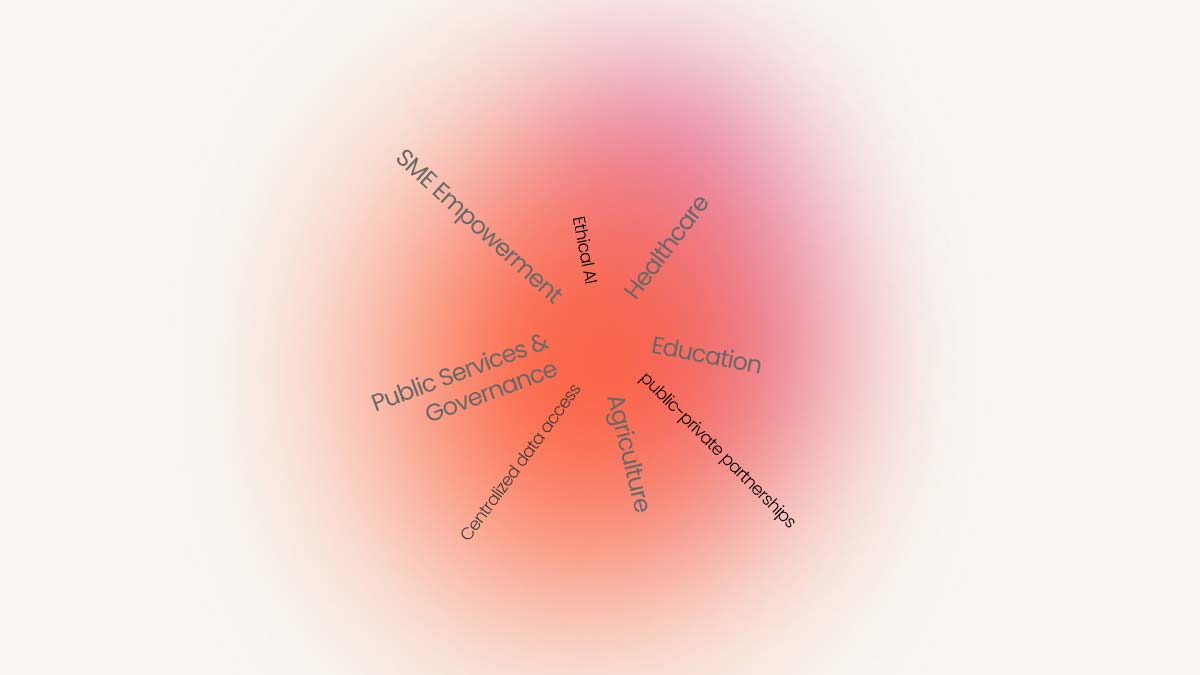
Artificial Intelligence (AI) is transforming societies worldwide, and Sri Lanka stands at a vital moment to make use of its potential not just for economic growth but for meaningful social innovation. By bridging technology with creativity and purpose, AI can help address the country’s most pressing challenges across healthcare, education, agriculture, governance, and beyond.
The Current AI Landscape in Sri Lanka
Sri Lanka has begun taking careful steps toward AI adoption, but the journey is still in its early stages:
- Government Commitment: From 2024, LKR. 3 billion was allocated to promote digital transformation, with AI playing a vital role.
References: https://www.biometricupdate.com/202502/sri-lanka-sets-budget-for-2025-digital-transformation-strategy - Economic Ambition: The goal is to increase the digital economy’s contribution from the current 3–5 % of GDP to 15 % by 2025.
References: https://meatechwatch.com/2025/06/30/sri-lanka-targets-fivefold-digital-economy-growth-in-five-years-with-ai-centric-strategy/ - AI Readiness: Despite this goal, Sri Lanka’s ranking of 85th out of 193 countries in terms of global AI readiness shows gaps in talent, infrastructure, and adoption.
References: https://oxfordinsights.com/ai-readiness/ai-readiness-index/ - Private Sector Adoption: A study found only 26 out of 279 listed companies have AI initiatives, showing huge untapped potential.
References: https://ideas.repec.org/a/bjb/journl/v14y2025i4p707-717.html - National AI Strategy: The government has a framework promoting responsible, inclusive AI aligned with the UN Sustainable Development Goals (SDGs).
References: https://www.citralab.lk/work/supporting-the-development-of-the-national-artificial-intelligence-ai-strategy-for-sri-lanka
Why AI is Critical for Social Innovation
Social innovation aims to create solutions that improve lives, strengthen communities, and address systemic problems. AI adds unique capabilities to this task, increasing its effectiveness.
- Data Driven Insights: AI can process huge amounts of data to identify patterns and trends invisible to the human eye.
- Scalable Solutions: Once developed, AI models can be deployed across multiple regions with minimal cost.
- Personalization: AI enables customized solutions whether in education, healthcare, or public services making interventions more effective.
- Predictive Capabilities: By anticipating needs and risks, AI can prevent problems rather than merely react to them.
Opportunities for AI in Social Innovation in Sri Lanka
Based on the current statistics, several sectors emerge as high impact areas for AI driven innovation:
- Healthcare
- Why? Limited resources and rural healthcare gaps.
- Potential AI Solutions: Remote diagnostics, disease outbreak prediction, and AI assisted medical imaging.
- Why? Limited resources and rural healthcare gaps.
- Education
- Why? Geographical inequality
- Potential AI Solutions: Personalized learning platforms, AI driven tutoring in local languages, and curriculum adaptation for different learning needs.
- Why? Geographical inequality
- Agriculture
- Why? Agriculture employs nearly 25% of the workforce, yet productivity is low.
- Potential AI Solutions: Crop disease detection, predictive weather analytics, and precision farming techniques.
- Why? Agriculture employs nearly 25% of the workforce, yet productivity is low.
- Public Sector & Governance
- Why? Need for greater efficiency and transparency.
- Potential AI Solutions: AI powered citizen service portals, automated document processing, and predictive resource allocation.
- Why? Need for greater efficiency and transparency.
- Small and Medium Enterprises (SMEs)
- Why? Many SMEs unknowingly use AI (e.g: WhatsApp automation) but lack strategic integration.
- Potential AI Solutions: Cost effective AI toolkits for marketing, customer support, and operational effectiveness.
- Why? Many SMEs unknowingly use AI (e.g: WhatsApp automation) but lack strategic integration.
Challenges to Overcome
Sri Lanka’s poor AI readiness ranking highlights significant challenges despite the potential:
- Lack of skilled AI professionals.
- Limited AI infrastructure and research capacity.
- Lack of quality data and data accessibility. In many sectors, reliable, up to date, and structured datasets are low, which significantly affects AI model development and deployment. Even when data exists, it may be fragmented across institutions, not digitized, or subject to restrictive access policies.
- Low awareness among businesses and the public, about AI applications.
- Concerns about ethics, data privacy, and equitable access.
How Data Platforms Can Accelerate AI for Social Innovation
One promising example of bridging the data gap is the Sustainable Development Goals (SDG) Monitoring Platform implemented by the Sustainable Development Council of Sri Lanka. This platform combines national and regional level data aligned to the UN’s SDG framework, providing:
- Centralized Access: Multiple ministries, agencies, and stakeholders can feed and retrieve data from one location.
- Standardized Data Formats: Ensures consistency and comparability across datasets.
- Transparency: Public and institutional access to relevant metrics helps build trust and encourage collaboration.
- Decision Making Support: Policymakers and innovators can leverage these datasets to track progress, identify gaps, and design AI powered interventions that are evidence based.
For example, if the platform shows lagging progress on SDG 3 (Good Health and Well being) in certain provinces, AI tools could analyze hospital records, patient feedback, and local environmental data to suggest targeted healthcare programs. Similarly, AI can cross analyze SDG datasets with real time social media sentiment or climate data to design faster, more precise interventions.
Sri Lanka can encourage the development of AI driven solutions with measurable social impact by expanding these platforms and making additional datasets available for innovation.
A Roadmap for AI Driven Social Innovation
To fully unlock AI’s potential for social good, Sri Lanka must:
- Invest in AI Education & Skills: Train both technical experts and non technical stakeholders to understand and apply AI.
- Foster Public and Private Partnerships: Collaborations between government, private sector, and NGOs can accelerate adoption.
- Promote Ethical AI Use: Implement frameworks for transparency, bias reduction, and data privacy.
- Support AI Startups & Innovation Labs: Provide funding, mentorship, and testbeds for socially impactful AI projects.
- Measure Impact: Use clear metrics to track how AI interventions improve social outcomes.
Conclusion
Sri Lanka’s AI journey is still in its infancy, but with a focused strategy, it has the potential to become a leader in using AI for social good. By targeting healthcare, education, agriculture, governance, SME empowerment, and using platforms like the SDG Monitoring Platform, the country can create scalable, impactful solutions that improve lives while advancing economic growth.
AI is not just about algorithms and data; it’s about shaping a future where technology expands human potential and addresses the root causes of societal challenges.
You may also like

Hybrid Vs. Native Mobile App Development. What is the best for your business?
Asitha Vajirapani | 4 min read
Introduction If you have been researching doing a mobile app for your business, chances are that you would have come across the....
Read More -
Why a Holistic Design Approach Matters: Going Beyond Systems Thinking
Dharani Karunarathna | 8 min read
In today's rapidly evolving world, effective design must address complexity beyond mere systems and functionalities. This is where holistic design comes into....
Read More -
7 things to know before you develop a mobile app
Asitha Vajirapani | 5 min read
It’s sometimes hard to fathom that just over a decade ago, our lives were vastly different to what it is today; and....
Read More -